
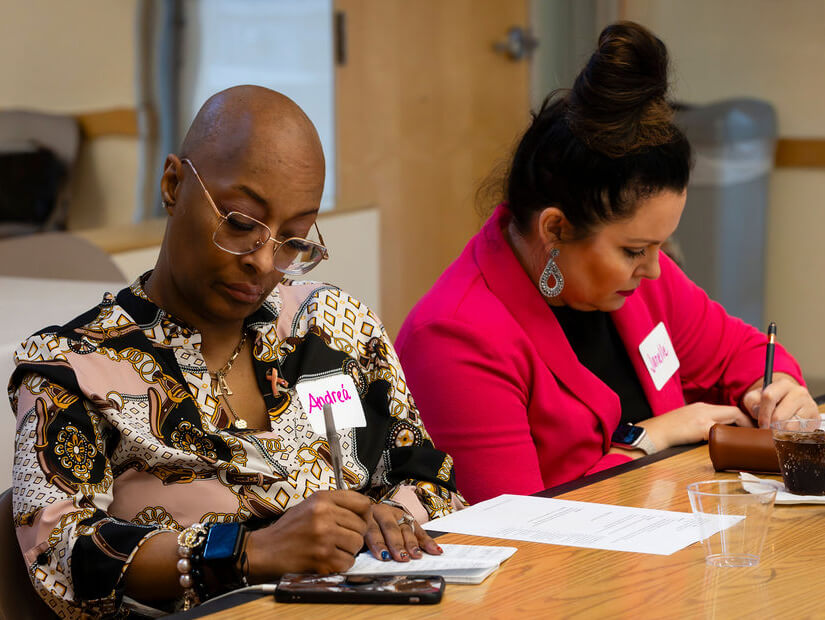
Across the country, early childhood systems face mounting complexity. The Educare Network is responding by investing in leadership as a powerful lever to align practice, strengthen culture, and support lasting quality.
Early childhood education in the United States is at a critical inflection point. Despite increased public and private investment in parts of the country, the field remains fragmented, the workforce is under sustained pressure, and too many children and families still lack consistent access to the high-quality early learning they deserve. Incremental gains alone have not produced the lasting change children and families need.
Over the past year, under renewed leadership, the Educare Network has advanced a strategic realignment—strengthening leadership pathways, deepening collaboration among school leaders, and elevating the integration of research, policy, and practice. As a national community of birth-to-five schools spanning 15 states, Washington, D.C., and the Winnebago Indian Reservation in Nebraska, Educare has intentionally invested in leadership at every level as a powerful lever for aligning practice, strengthening culture, and creating the conditions for educators and children to flourish.
“If early childhood systems are to achieve sustained excellence, we must fundamentally rethink how we invest in leadership at every level,” says Dr. Kara H. Ahmed, President of the Educare Network. She emphasizes that today’s early childhood leaders are navigating extraordinary and expanding demands—from securing stable funding and strengthening the workforce to advancing instructional quality and navigating rapidly evolving policy landscapes.
If early childhood systems are to achieve sustained excellence, we must fundamentally rethink how we invest in leadership at every level."
— Kara H. Ahmed, President of the Educare Network
"By harnessing the power of relationships, applying research on how adults learn, and grounding our work in deep knowledge of child development, we are building the leadership infrastructure required for lasting quality and true coherence,” Ahmed adds. This is how we create early childhood systems that endure—and deliver on their promise for every child and family.
Inside the Educare Network’s Approach
In a field grounded in relationships and human development, how leaders learn together matters. Educare’s investment in leadership extends well beyond in-person convenings. The Network’s approach insists that learning be continuous, relational, and embedded in practice rather than confined to isolated moments.
Many Educare leaders report thinking differently about the conditions that foster leadership growth—for themselves and for their entire school community. Leaders recognize that trust and connection are not add-ons—they are foundational. Several leaders have noted that observing practice in real time has made ideas about quality feel concrete and transferable.
Trust and connection are not add-ons—they are foundational.
The way the Network engages with leaders shapes how leaders engage with coaches and teachers, which in turn influences how teachers interact with children and families. In early childhood education, where quality depends on daily adult-child interactions, leadership learning is not peripheral to improvement—it is central.
To sustain momentum, thoughtfully guided conversations are facilitated biweekly, creating space for leaders to share what they are trying, what is working, and what remains challenging. In-person convenings build on the same disciplined cycle of observation, reflection, and shared inquiry. Rather than layering on a new initiative, the Educare Network model aligns leadership, practice, and learning. Over time, this structured rhythm of learning is becoming embedded across all levels of the Network.

Leadership Investment in Action
Educare is advancing this commitment through a Network-wide effort. One concrete expression of that work took place this past December, when more than 20 Educare senior leaders from across the country—each responsible for daily operations and instruction at their respective schools—gathered at Educare Miami for a two-day learning experience grounded in learning from practice and from one another.
It began with a straightforward invitation: come observe teaching and learning in real time. There were no presentations and no best practices delivered from the front of the room. Instead, leaders observed teachers and children interacting, noted what was working, and reflected together on what makes teaching effective—and how leadership creates the conditions for learning and flourishing.
Rooted in the framework of Powerful Interactions, the experience invited leaders to consider its principles of being present, building connections, and extending learning not only to children, but also to their own leadership practice. Leaders circulated quietly among the classrooms, watching teachers interact with purpose and patience. Shared language emerged for discussing practices that strengthen individual and collective impact. “The space created allowed us to connect authentically and learn from one another,” said Johna Rhooms, Site Manager, Educare Seattle. “We shared laughter, vulnerability, and meaningful fellowship—resulting in an experience that was both intentional and impactful for us as leaders.”

The space created allowed us to connect authentically and learn from one another.”
— Johna Rhooms, Site Manager, Educare Seattle
Educare Miami played an active role in hosting and shaping the gathering, drawing on its strong culture of instructional coherence, transparent documentation of practice, and deliberate use of observation and coaching to support educator and leader development. Immersion in a high-functioning environment enabled participants to surface the leadership, relational, and implementation conditions necessary to sustain and scale quality across early learning systems.
Paula Moujalli, executive leader of Educare Miami and Vice President of the Center for Excellence at United Way of Miami-Dade, reflected on the purpose of the convening: “We were honored to host this group of Educare leaders at our school. Our goal is always to create a space where educators and leaders can learn alongside one another—building capacity through real-time observation of teacher-child interactions and staying grounded in what matters most for children and families.”

Throughout the convening, the Educare Network engaged school leaders by pausing, observing, and thinking together rather than prescribing from a distance. Stepping into classrooms, leaders noticed small but significant moments:
- “Did you see when the teacher paused to give the child time to put the napkins out on the snack table? She gave him a chance to be competent and proud.
- “I noticed she shared the child’s interest before extending her learning by asking a question about the fish.”
These precise exchanges modeled interactions leaders could facilitate with their own staff.
Abstract ideas about quality quickly became tangible. Moujalli and Educare Miami’s program director Vivyan Sanchez guided leaders through the documentation displays lining the school’s walls, highlighting how teaching and learning are made visible through careful observation, reflection, and narrative.
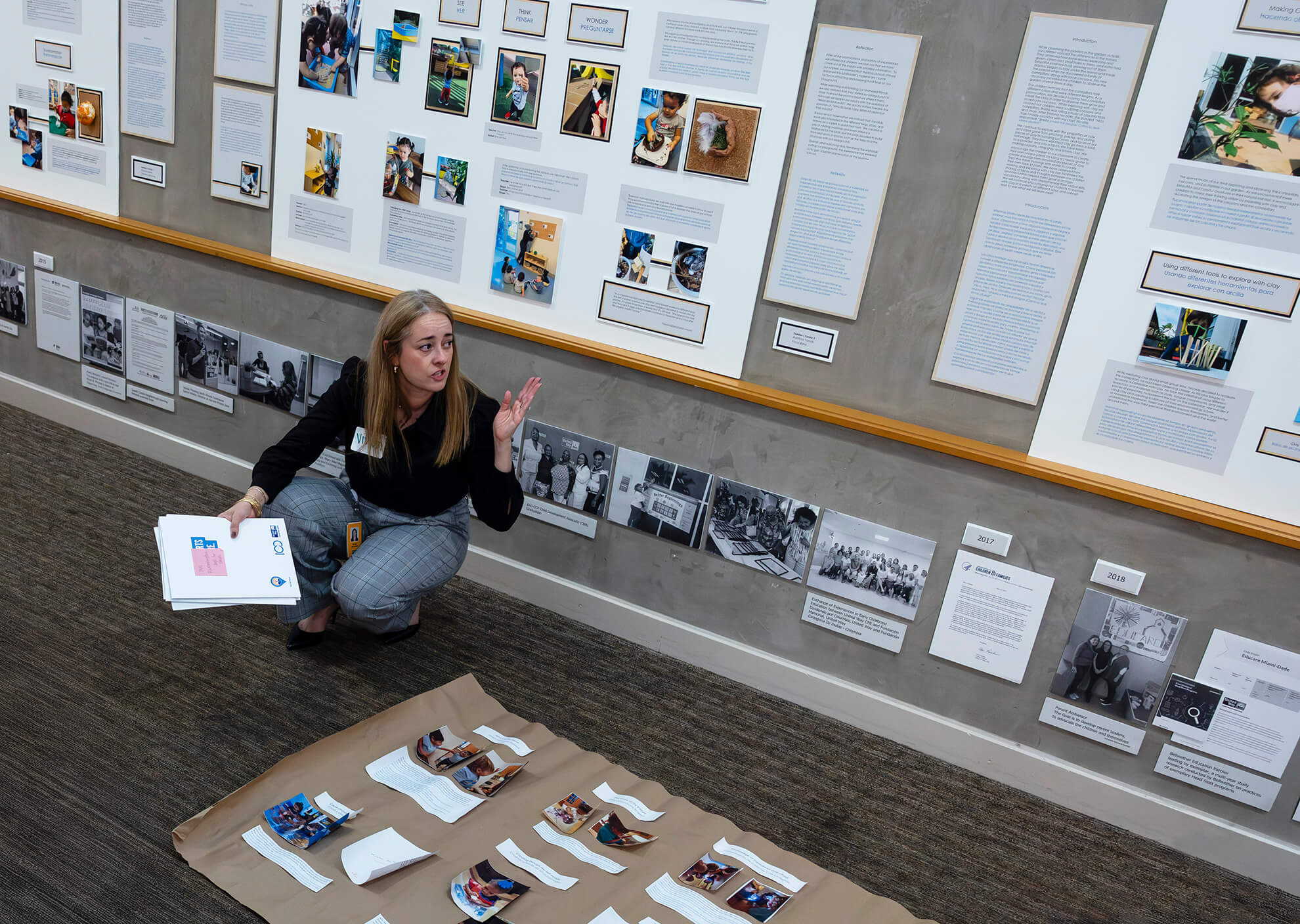
“This was a grounding moment,” said Erica Palmer, Education Manager of Educare Central Maine. “It stretched me as a leader to consider how can we make big decisions for our school if we are not talking clearly about what the work actually is and why we are doing it?”
This was a grounding moment…It stretched me as a leader to consider how can we make big decisions for our school if we are not talking clearly about what the work actually is and why we are doing it?”
— Erica Palmer, Education Manager, Educare Central Maine
Leadership as Core Infrastructure
This model reflects months of intentional redesign and renewed alignment across the Network. The result is a clearer, more coherent approach to leading and learning—one that treats investment in leadership as essential infrastructure rather than a one-time event.
Educare treats investment in leadership as essential infrastructure rather than a one-time event.
These experiences also surface important questions for both the Educare Network and the broader field: What would it look like if leadership investment were grounded not in episodic training, but in structured, relational learning embedded in daily practice? How might collective learning be designed to deepen leadership capacity over time?
For Ahmed, these are not theoretical questions—they point to the core of Educare’s strategy. “Strategic investments in leadership at every level can create a thriving workforce, elevate instructional quality, and advance system coherence simultaneously.” She adds, “Lasting impact depends on aligning values, funding, standards, accountability, and professional learning with how leaders and educators actually grow—through relationships, practice, and pausing to think together.”
Leadership learning is not peripheral to improvement—it is central.
In a field facing complex and persistent challenges, investing in leadership at every level through structured, relational learning may be one of the most high-leverage ways Educare can help build early childhood systems that truly deliver for every child and family.